

News and Stories
-
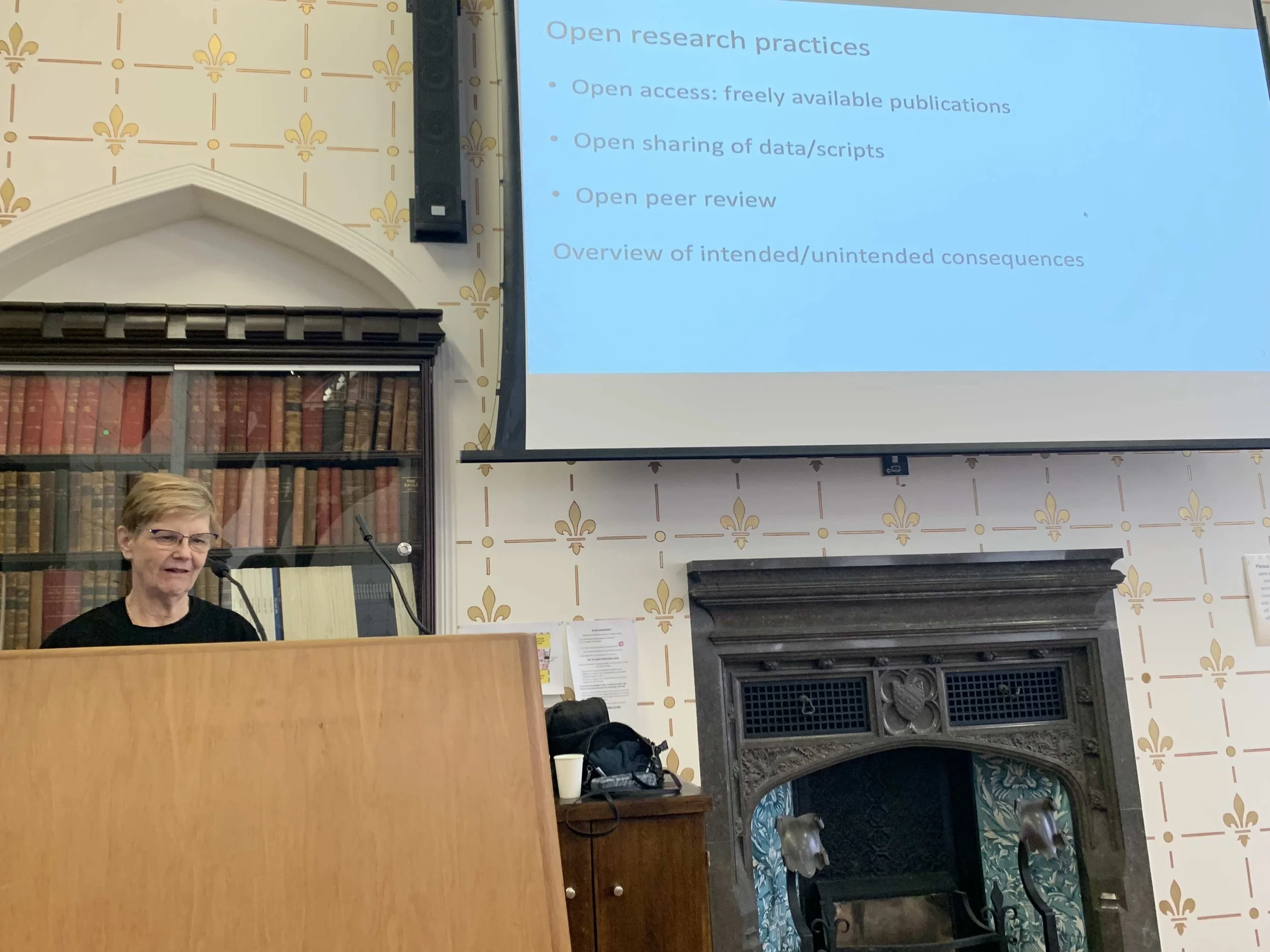
Benevolent and Malevolent Unintended Consequences of Open Science
Date: 22/05/2026
On 27 March 2026, the RRCam community welcomed Dorothy Bishop for a lecture on the benefits and unintended consequences of open science. She highlighted how practices such as open access, data and code sharing, open peer review, and study pre-registration can strengthen research quality, transparency, and accountability, while also helping expose fraud and misconduct. Professor Bishop concluded that although open science systems can be exploited, greater transparency remains one of the strongest tools for improving research integrity and reproducibility.
-
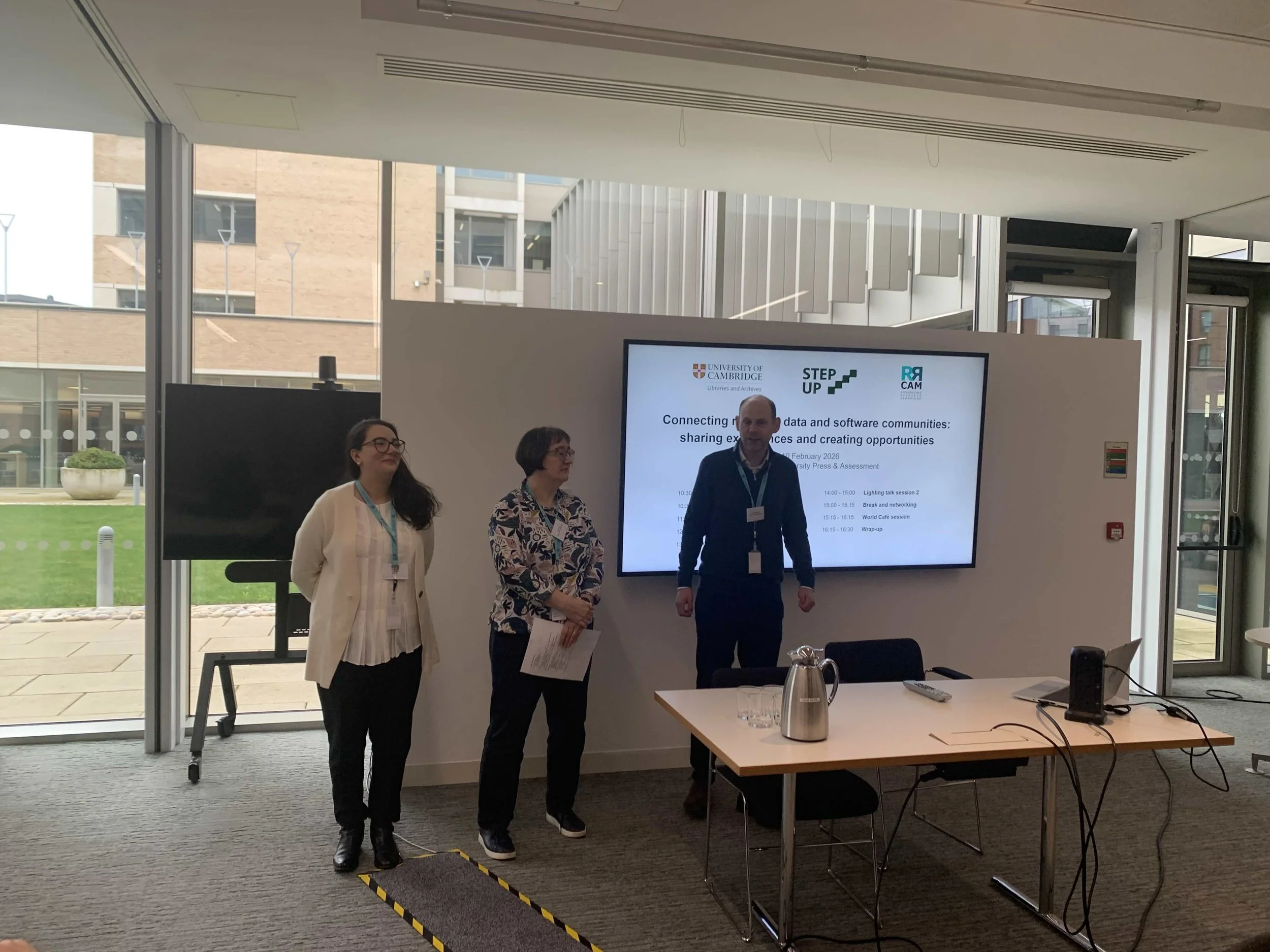
Connecting Research Data and Software Communities
Date: 22/05/2026
During Love Data Week on 10 February 2026, STEP-UP, the University of Cambridge Research Data Team, and Reproducible Research Cambridge brought together participants from across the UK and Europe to discuss the intersection of research data and research software in digital research. Talks and World Café discussions explored reproducibility, infrastructure, AI, sustainability, training, and career development, while also highlighting persistent issues such as invisible technical labour, inconsistent institutional support, and limited long-term funding.
-
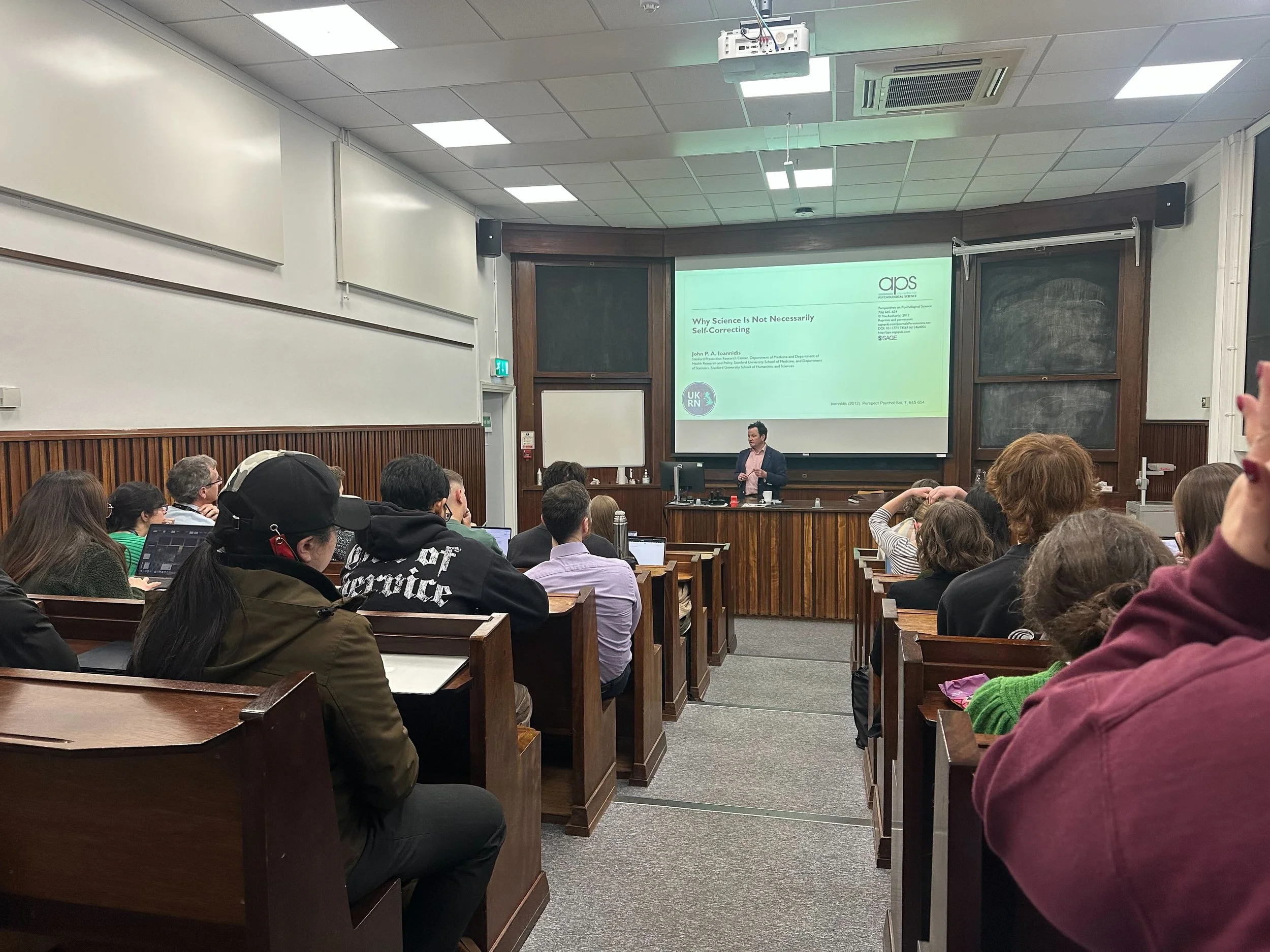
Research Ecosystems and Research Quality: RRCam Lecture by Marcus Munafo
Date: 05/03/2026
On 13 February 2026, Professor Marcus Munafò, Executive Director of the UK Reproducibility Network, delivered a thought-provoking lecture titled “Research Ecosystems and Research Quality” as part of the Reproducible Research Cambridge community events series. The session challenged us to examine not only how research is conducted, but how the structures surrounding research shape the quality of the knowledge we produce.
-
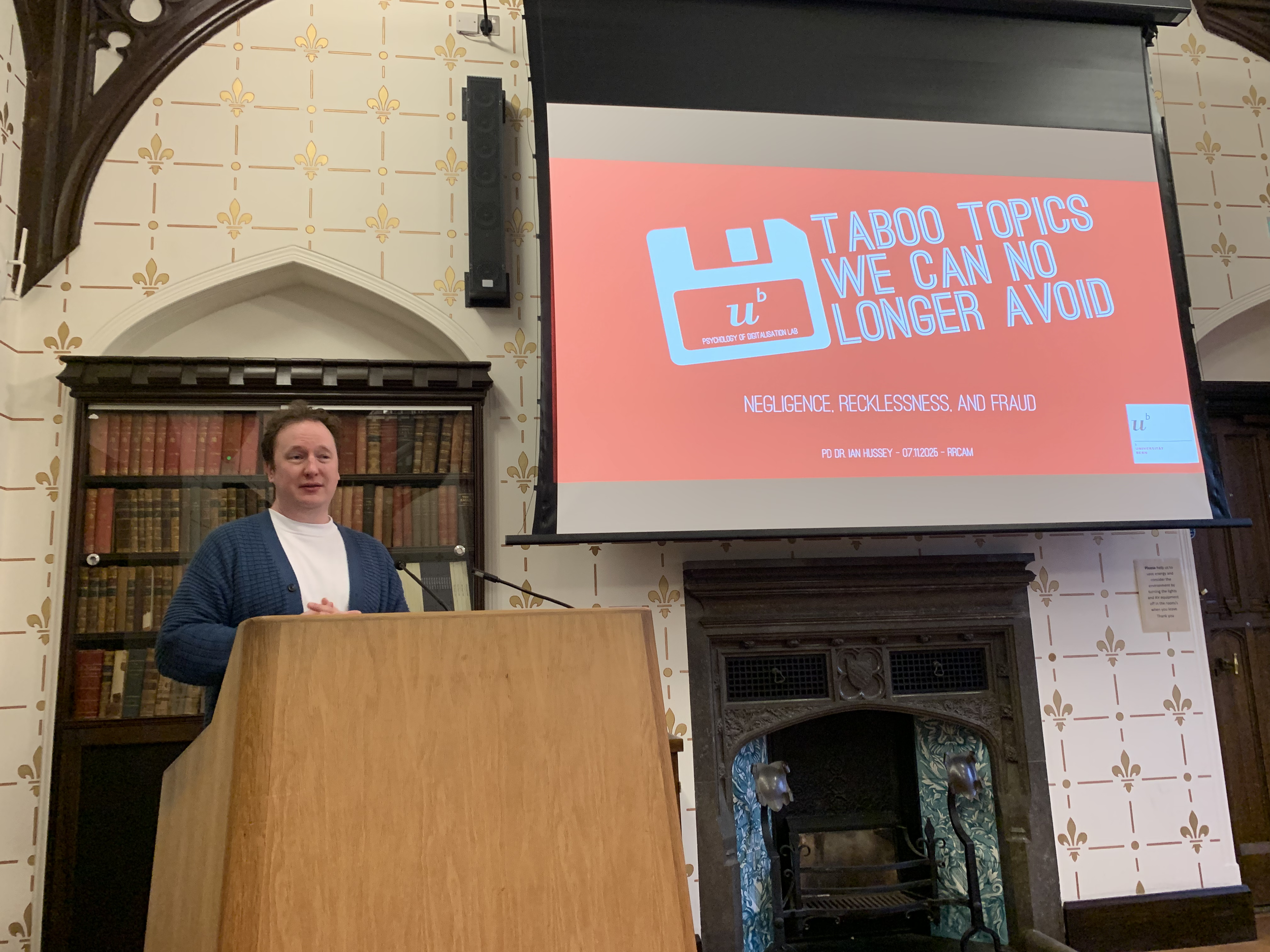
RRCam Launches with Inaugural Lecture by Dr Ian Hussey
Date: 04/12/2025
Last month marked the official launch of RRCam, celebrated with an inaugural lecture at St John’s College delivered by Dr Ian Hussey. His talk, “Taboo topics we can no longer avoid,” offered a thought-provoking exploration of the vulnerabilities within today’s research and publication landscape.